CRISTOFORI'S PIANO e FORTE - THE FIRST PIANOFORTE OR FORTEPIANO
Fortepianos
> Cristofori
- Maffei's article and the drawing of Cristofori's piano action
- Detailed description of this instrument
-
Soundclips of Cristofori-action fortepianos
-
Recordings with my Cristofori pianos
By 1700 Cristofori's invention of the piano action was well enough developed that an instrument was acquired by the Medici collection of musical instruments. In 1711 this invention was described in an article in the Giornale de' Letterati, which, as later became known, was compiled by Scipione Maffei. Included in the article was a drawing of the action.
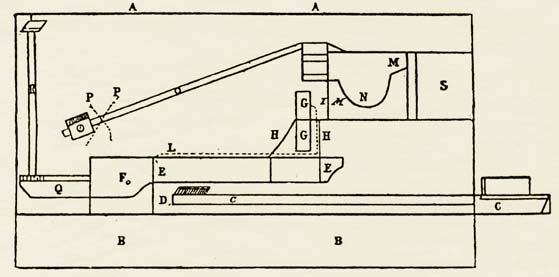
This reproduction is well known, but is it the original 1711 drawing? The answer contains several surprises, with interesting implications for understanding Cristofori's invention, and can be found here.
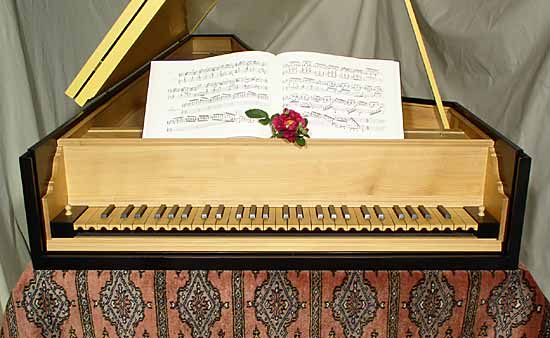
However well Cristofori may be known as the inventor of the piano action, the performance of his instruments is still little known even in specialist musical circles. This derives from the fact that only three of Cristofori's fortepianos survive and none of these is playable in its original condition. Reproductions of these instruments enable us to discover the extent of their tonal capabilities where experimentation on the originals is not possible. This undertaking has already been started by Stewart Pollens, Reiner Thiemann, David Sutherland, Kerstin Schwarz & Tony Chinnery, and Nobuo Yamamoto. My reproduction (pictured above and below) and research on Italian stringing practices continues and complements this work. Recently Thomas and Barbara Wolf completed their replica of the 1722 Cristofori fortepiano.
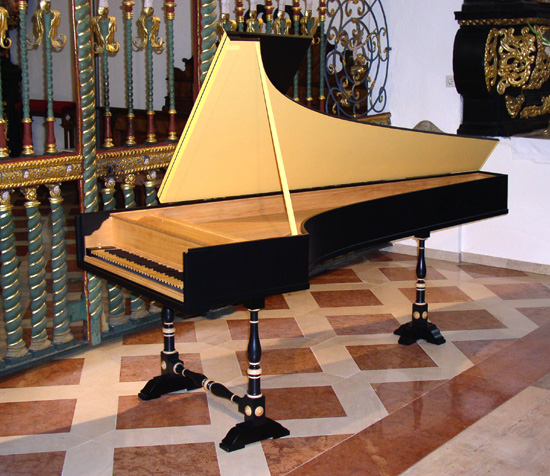
The 1730 Cristofori-Ferrini fortepiano
The first instrument known to have been built was described in an inventory of 1700 as an "Arpicimbalo di Bartolomeo Cristofori, di nuova inventione, che fa il piano e il forte" [a harp-harpsichord by Bartolomeo Cristofori, of recent invention, which plays softly and loudly], but prototypes were probably already working by 1690. The newly-coined name "Arpicimbalo" combining the name for the harp [arpa] and harpsichord [cimbalo or cembalo] may tell us something about the way the character of the sound was perceived, as being close to the harp.
The construction of my instrument resulted from the series of concerts for Scarlatti's music staged at the Musée de la Musique, Paris, to be played on harpsichord and piano in 2003. Since Queen Maria Barbara is known to have owned four Florentine fortepianos (and a fifth piano was probably also from Florence), two of which had 56-note compasses, it was appropriate to reconstruct one of these instruments in order to enable a wider range of Scarlatti's music to be played. Most of the Queen's pianos were probably built by Giovanni Ferrini, Cristofori's assistant and successor. One of these instruments was signed by him in 1730, a year before Cristofori's death and on the Queen's death in 1758 was bequeathed to the singer Farinelli.
 My reconstruction started by assessing how Cristofori might have laid out the principal dimensions of his instruments in order to derive a size for the new compass GG,AA-d³,e³ using his workshop traditions.
Cristofori's C-c³ piano keyboards are nominally 25 Florentine soldi wide, this larger GG,AA-d³,e³ compass is nominally 29 soldi. The principles have been examined in 'A contribution to the analysis of local units of measurement in Italian keyboards' (see Publications).
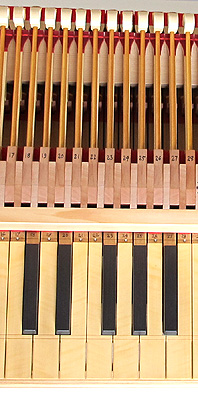
Construction then commenced by building the hammer rack that supports and guides the hammer butts (rotelle). Since this is made of 56 rotelle and 57 spacers its exact size is difficult to determine in advance. Thus, dimensions across the width of the instrument are determined by the finished rack.
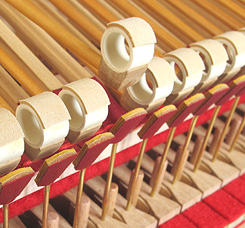 An unusual feature of the later Cristofori action is the use of small paper cylinders for the hammer heads. This reduces the inertia of the hammershank and head by about 1/3 compared with a solid head of maple. The technology for this was known in the 15th century since paper organ pipes were made in this fashion by gluing paper layer over layer. There is a slight yet audible difference from using
the
paper cylinders: on hard playing the cylinder head is less prone to give the harsh metallic
timbre of early piano strings that are excited beyond the normal range. A possible explanation is that the cylinder is deformed and thereby increases the area of leather in contact with the string, which damps the higher order harmonics more.
An unusual feature of the later Cristofori action is the use of small paper cylinders for the hammer heads. This reduces the inertia of the hammershank and head by about 1/3 compared with a solid head of maple. The technology for this was known in the 15th century since paper organ pipes were made in this fashion by gluing paper layer over layer. There is a slight yet audible difference from using
the
paper cylinders: on hard playing the cylinder head is less prone to give the harsh metallic
timbre of early piano strings that are excited beyond the normal range. A possible explanation is that the cylinder is deformed and thereby increases the area of leather in contact with the string, which damps the higher order harmonics more.
Although Maffei's interview with Cristofori revealed that he used a heavier stringing for his pianos than for harpsichords we were given no specific details. From a knowledge of Cristofori's harpsichord stringing practices we can infer that the wire gauge indications of the 1767 Portugese piano by Antunes probably reveal the essence of Cristofori's practice in stringing fortepianos. Since Portugese fortepianos and the Antunes instrument are clearly based on a Cristofori design, we may conclude that he had close access to a Cristofori instrument. It is this hypothesis about the weight of stringing which I have implemented in the reconstruction of Queen Maria Barbara's fortepiano. ("Das Hammerklavier von Bartolomeo Cristofori: Das Vorbild für Gottfried Silbermanns Hammerklavier?" in Publications ).
The weight of stringing which this evidence reveals leads to a tone of instrument which is anything but the rather weak-voiced instrument we have sometimes been led to expect from the earliest fortepianos. The use of cypress for the soundboard, brass for the strings, and paper cylinders covered with deer leather with their graded dimensions from treble to bass all suggest that the tonal result Cristofori was aiming at could be described by the Italian word "soave" (sweet), not the brighter and more metallic sound of some later, iron-strung pianos. Thus, this earliest of pianos surprises because it does not meet the immediate expectation of many.
The dynamic range of this reproduction is also wider than many expect, which is made possible partly by Cristofori's double-bentside construction. This remarkable development of harpsichord framing into two separate frames, one for the soundboard and one for the strings solved the problem of using a higher string tension yet avoiding the consequences of the inevitable case distortion on the soundboard. It was so far ahead of its time that it was not until about the 1820s that piano makers began to produce frame designs which rivalled Cristofori's in effectiveness.
Cristofori's developed action in the 1722 and 1726 fortepianos is a little heavier than the Viennese Prellmechanik action of the 1790s, which is partly explained by the longer hammer shank. However, a light action is not necessarily a fast one. In Cristofori's developed action the keylevers are much shorter than in Viennese actions, but have a different balance point which makes the touch slightly heavier and thereby faster. Together with the check, which Cristofori also invented, these design features produce a fast action capable of quick and reliable repetition.
This instrument is now in the collection of the Schola Cantorum Basiliensis, Basel, Switzerland. A second fortepiano has been delivered to Dr. Jacqueline Ogeil in Australia.
A more detailed description of the instrument, its construction, and Cristofori's achievement with the nuova inventione.
A list of recordings played on Cristofori-action fortepianos (including original instruments) can be found at this website. Soundclips of all the playable antique instruments can be heard.
RECORDINGS WITH MY CRISTOFORI PIANOS
The instrument was the feature of a BBC Radio programme 'The Early Music Show' (broadcast 15 Nov 2003, 17 April 2004), played by Ella Sevskaya. She also recorded music by Galuppi and Platti for Bayerischer Rundfunk (BR4) in 2004.
 Aline Zylberajch's CD 'Domenico Scarlatti: Le Pianoforte de Maria Barbara'.
Diapason d'or January 2005 and Diapason d'or de l'année November 2005.
AMY002. Ambronnay Further details at this website on this recording.
 Linda Nicholson recorded on this fortepiano her selection of 15 Scarlatti sonatas. CAPRICCIO 67112
 Friederike Heumann (viola da gamba), Dirk Börner (fortepiano), and Gaetano Nasillo (cello) have performed C.P.E. Bach's sonatas for viola da gamba using the fortepiano for obligato and basso continuo parts. ALPHA 080 Alpha
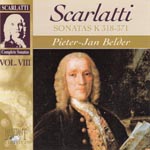 Peter-Jan Belder, 13 Scarlatti sonatas (K322-K363) in part VIII of his complete Scarlatti recording. BRILLIANT CLASSICS 93031
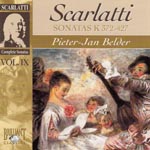 Peter-Jan Belder, 19 Scarlatti sonatas (K372-K425) in part IX of his complete Scarlatti recording. BRILLIANT CLASSICS 93222
These recordings have been re-issued as a 36-CD box set. Brilliant Classics 93546
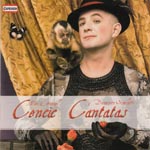 Max Emanuel Cencic sings Scarlatti canatas with a basso continuo comprised of Maya Amrein (cello), Yasunori Imamura (theorbo and guitar), and Aline Zylberajch (fortepiano). CAPRICCIO 67173.
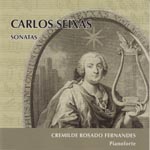 On the occasion of the 300th anniversary of Seixas' birth Cremilde Rosado Fernandes recorded a tribute to this composer. NUMÉRICA 1163
 Maria Cristina Kiehr, Edoardo Torbianelli, Chiara Banchini, Marc Hantaï, Rebeka Rusò, Daniele Caminiti recorded music from the Medici court with Cristofori's early pianoforte. GLOSSA 922504.
 Linda Nicholson shows how the composers Handel, Scarlatti, Platti, Giustini, Paradisi, Alberti, and Soler discovered the capabilities of the newly-invented piano.
Diapason d'or February 2017. Passacaille 1024
 Paradisi